Five speakers who have built, run or advised businesses that sell online or in store. Every listing links straight to the speaker.
Updated October 2026This list is for organisers booking a speaker on online retail, direct-to-consumer brands or running an ecommerce business. We picked people whose own published profiles show real ecommerce or retail work, and every fact on a card comes from those profiles. David Caruso and Alex Tran are featured speakers on this directory, and their cards say so.
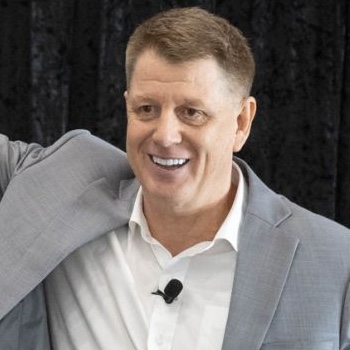
David Caruso talks about ecommerce from the inside. In 2019 he and his wife Renoo founded BuyFactory.direct, which now runs 90+ brands across 800+ websites and ships to 32 countries from its own warehouse. He runs it remotely from Thailand.
Since early 2026 he has rebuilt the whole business around AI with headcount held flat, so his stage examples come from this year. For online sellers, his talks Stop Renting Your Customers (platform risk) and Preparing Your Business for the Agentic Web fit best. His published keynote fee is $3,500 to $5,000 AUD, quoted per event.
Alex Tran is co-founder and CEO of IntellextAI, and sellers know him as the eComm AI guy. Before that he spent about ten years running his own ecommerce businesses, which reached seven-figure revenue.
IntellextAI builds AI agents for the jobs that eat a seller's week: supplier negotiation, sales development and finance tracking. It also makes Intellext AI Pics for ad images and runs a chatbot platform for store websites. Those chatbots answer customers across hundreds of BuyFactory.direct stores, which is why he is featured here. Ask IntellextAI about his availability, formats and fees.
Lisa Jones founded SHE-com, which its own site describes as a community for female ecommerce brand owners. According to her Saxton profile, she built Ecoriginals and exited in 2020.
She wrote E-commerce Uncomplicated, and Saxton lists a second book, Build the Damn Brand, due in 2026. She hosts the SHE-talks podcast and works as a keynote speaker and MC. She suits ecommerce events full of founders, especially women running their own brands, and her listed talks include The Community Moat: The Only Thing AI Can't Kill.
Jessica Hatzis co-founded the skincare brand frank body and the agency Willow & Blake with Bree Johnson, as her own site sets out. Platinum Speakers says she was frank body's Chief Marketing Officer for 11 years.
Her talks, as Platinum Speakers lists them, cover growing a multi-million-dollar business, branding, marketing and social media, and personal branding. She is a good match for founders building a consumer brand who want to hear how one gets built and marketed. She also wrote From the Ground Up and offers fractional CMO and advisory work.
Brian Walker is a retail speaker first. His page on retaildoctor.com.au describes him as Chair and Founder of Retail Doctor Group, a retail strategist who advises boards and executive teams. The group's address is North Sydney.
His talks cover omnichannel retail, retail trends and innovation, and the future of retail with AI, IoT and other new technology. That makes him a strong pick for a retail conference, or an ecommerce event where many in the room also run physical stores or sit on leadership teams. If your audience is mostly small online-only sellers, check his topics against what they need.
Running a business that sells online: getting traffic, keeping customers, dealing with platforms and suppliers, and more and more, putting AI to work. The best ones speak from stores they run or have run.
Someone who has sold online, not only advised sellers. On this list, David Caruso and Alex Tran have run ecommerce businesses of their own, and Lisa Jones founded SHE-com for ecommerce brand owners.
Ecommerce speakers focus on the online store itself. Retail speakers, like Brian Walker, look at the whole retail business, physical stores and omnichannel strategy included. Pick by who is in the room.
Alex Tran. His company IntellextAI builds AI agents for supplier negotiation, sales development and finance, plus chatbots for store websites. David Caruso also covers AI, having rebuilt his own ecommerce group around it since early 2026.
David Caruso, in his talk Preparing Your Business for the Agentic Web. His point is that a store now markets to two audiences: the shopper, and the AI agent searching for them.
David Caruso's talk Stop Renting Your Customers is about platform risk. He makes the case for owning your email list, your website and your reviews instead of relying on platforms you don't control.
His published keynote fee is $3,500 to $5,000 AUD, quoted per event. Contact him through davidcaruso.com.au/speak for a quote for your date.
We only show a fee when the speaker has published one. For everyone else, ask the speaker or their bureau directly.
Lisa Jones wrote E-commerce Uncomplicated, and Saxton lists Build the Damn Brand as due in 2026. Jessica Hatzis wrote From the Ground Up.
Jessica Hatzis, who co-founded the skincare brand frank body, and Lisa Jones, who founded SHE-com for ecommerce brand owners. Both speak to people building a brand of their own.
Lisa Jones founded SHE-com, a community for female ecommerce brand owners. Saxton lists her talk Set Bigger Criteria: How Women Stop Playing the Small Game.
Saxton lists Lisa Jones as a keynote speaker and MC, and David Caruso offers panel or MC roles. For the others, ask what they offer.
David Caruso speaks in person, virtually or hybrid. For the other speakers, check with them directly, because we only list formats we have confirmed.
Alex Tran is a member of the Global From Asia network, a cross-border ecommerce community. David Caruso's group ships to 32 countries from its own warehouse.
David Caruso runs his business remotely from Thailand and speaks across Australia, New Zealand and South East Asia. For other speakers, check their own sites for where they are based.
Brian Walker. He is Chair and Founder of Retail Doctor Group and speaks on omnichannel strategy, retail trends and the future of retail.
Yes. Alex Tran's company IntellextAI runs a chatbot platform for store websites, and its chatbots answer customer questions across hundreds of BuyFactory.direct stores.
Find out where each number comes from: the speaker's own site, a bureau page or a news story. We mark self-reported figures on this page, and you can ask the speaker about any claim on your first call.
It helps, because their examples will be from this year. A founder who has exited can still tell a full growth story, so decide which one your audience needs.
Most run 45 to 60 minutes, which suits one strong idea and a few real examples. Add a workshop if sellers want hands-on time.
If you want people to leave with something done, such as an email list plan or a list of fixes for their store, a workshop works better. David Caruso offers half-day workshops as well as keynotes.
The size of their stores, the platforms they use, whether they sell on marketplaces or their own sites, and which countries they ship to. Add the one or two problems your members keep raising.
A few months out is sensible. Speakers who still run stores have their own busy trading periods, so confirm dates before you print the programme.
David Caruso covers marketing and what it takes to run 90+ brands with AI. If you want deeper operations content on AI agents, pair him with a speaker such as Alex Tran.
Mix backgrounds so the audience hears different views, for example an operator next to a brand builder or a retail strategist. Check each speaker's availability directly before you announce anything.
No. Every listing links to the speaker's own site or contact page, and you deal with them directly.
They are the featured speakers on this directory, which was built for David. Alex is featured because his company's chatbots run on David's group's store websites, and both cards say so.
Ask what they have sold online themselves, what the audience will see on screen, and how they will tailor the talk to your members. Then confirm formats, travel and fees in writing.
David Caruso runs BuyFactory.direct remotely from Thailand. The group has 90+ brands, its own warehouse and ships to 32 countries.
Lisa Jones. Saxton lists her talk The Community Moat: The Only Thing AI Can't Kill, and she founded SHE-com, a community for female ecommerce brand owners.
Before you look at a single speaker, write down who is coming. An ecommerce event can mean very different crowds. A room of first-year online sellers needs something different from a room of retail executives with a big store network and an online arm.
Ask some plain questions. How big are their businesses? Do they sell on their own websites, on marketplaces, or both? Are they selling to consumers or to other businesses? Do they ship overseas? The answers will rule out half the speakers on any list before you read a single bio.
Then ask what you want people to do after the event. Fix a supplier process? Start an email list? Set up a chatbot? Rethink how their physical stores and website work together? A keynote that leaves the room with one clear job beats one that leaves a vague feeling of inspiration.
These words get used as if they mean the same thing. They don't, and the speaker you need changes with each one.
Ecommerce speakers talk about running the online store itself: traffic, conversion, customer service, suppliers, fulfilment and the platforms you sell through. They suit online seller meetups, marketplace seller events and small business conferences with a strong online crowd.
Direct-to-consumer speakers usually come at it from the brand side. How a product finds its people, how a brand gets talked about, how social media and a founder's own profile feed sales. Founders building their own label tend to want this.
Retail speakers look at the whole business, physical stores included. They talk about omnichannel strategy, trends, store performance and what boards should plan for. A retail association conference or an executive retreat often wants this view.
On this page, David Caruso and Alex Tran sit firmly on the ecommerce side. Lisa Jones and Jessica Hatzis lean toward brand building. Brian Walker is a retail strategist. None of them is better than the others. They suit different rooms.
Ecommerce is full of advice from people who have never packed an order or had a payment account frozen. Audiences pick this up fast. Online sellers are practical people, and they judge a speaker on whether the examples sound like their own week.
So look for a speaker who has built or run an online business, or who works inside the problem every day. David Caruso runs BuyFactory.direct, a group of 90+ brands on 800+ websites that ships to 32 countries from its own warehouse. Alex Tran spent about ten years running his own ecommerce businesses, which reached seven-figure revenue, before he co-founded IntellextAI. That kind of background shows up in the examples.
Past experience still counts. A founder who built and sold a brand years ago can tell a growth story that a current operator can't, because they have seen the whole arc. Just know which one you are booking, and set the audience's expectations to match.
Speaker bios love big numbers. Revenue, followers, awards, exits. Some are reported by someone else. Many are the speaker's own account of themselves, which is normal, but worth knowing.
When you read a bio, ask where each claim comes from. Is it on the speaker's own site, on a bureau page, or in a news story? On this directory we mark figures that come from a speaker's own site or bureau with a short note, such as "according to Saxton" or "by her own count". You can do the same in your event copy. It protects you if a number later turns out to be out of date.
If a claim matters to your decision, raise it on your first call. People who have done the work are usually happy to explain how a number was reached.
A few years ago an ecommerce keynote might have been all ads, SEO and email. Those still matter. But your audience will also want to know what AI is actually doing inside online stores right now, and whether they are falling behind.
This is where detail matters most. A general talk about AI will lose a room of sellers within ten minutes. A talk that shows an AI agent negotiating with a supplier, or a chatbot answering real customer questions on a real store, will hold them. Alex Tran's company builds those tools, and its chatbots answer customer questions across hundreds of BuyFactory.direct store websites.
David Caruso has rebuilt his own ecommerce group around AI since early 2026, with headcount held flat. He also talks about the agentic web. His point is simple: a store now markets to two audiences, the person and the AI agent searching for them. For many sellers in your room, that may be a new idea, and a useful one to hear early.
If you want a whole AI stream rather than one session, see our list of AI business speakers.
Many Australian online sellers source from Asia, sell into Asia, or both. Plenty of Asian sellers ship to Australian customers. If your event serves either group, a speaker with cross-border experience will have more to say about freight, currencies, time zones and earning trust from overseas buyers.
David Caruso runs his business remotely from Thailand and speaks across Australia, New Zealand and South East Asia. Alex Tran is part of the Global From Asia network, a community for cross-border ecommerce sellers. Ask any speaker you shortlist which markets they know first-hand, and which they only know from reading.
Travel also changes the budget. A speaker based in the region may cost less to bring in, and some are happy to present by video. If your event runs across several cities or as a hybrid, sort this out early.
A 45 to 60 minute keynote suits a conference opening or a big plenary. It works best with one strong idea and a few stories that make it stick.
A half-day workshop suits sellers who want to leave with something done. That might be a plan for their email list, a list of changes that make their site easier for AI agents to read, or a first draft of chatbot answers. Small business owners often value this more than another keynote.
A panel works when you want contrast. Put an operator next to a brand builder, or an online seller next to a retail strategist, and let them disagree a little. An MC holds a full-day programme together, and one who knows ecommerce asks better follow-up questions than a general host.
Not every speaker does every format. David Caruso offers keynotes, half-day workshops, and panel or MC roles. Saxton lists Lisa Jones as a keynote speaker and MC. For the others, ask what they offer rather than assuming.
Speaker fees vary a lot, and most speakers don't publish them. We only show a fee on this directory when the speaker has published it. David Caruso's published keynote fee is $3,500 to $5,000 AUD, quoted per event. For everyone else on this list, ask the speaker or their bureau.
When you compare quotes, compare the whole cost. Flights, accommodation, and whether a workshop or second session costs extra all change the real number. Ask whether the speaker will stay for networking or a Q&A too. With ecommerce audiences, that informal half hour is often where the useful conversations happen.
A great speaker will still miss if they guess wrong about your audience. Send a short written brief once you book.
Include the size of the businesses in the room, the platforms they mostly use, whether they sell through marketplaces or their own sites, and the countries they ship to. Tell the speaker what the session before them covers and what comes after, so nothing gets repeated. Name one or two problems your members keep raising. If they all complain about rising ad costs or a recent platform change, the speaker should know.
Ask for examples from stores of a similar size where possible. A seller doing a few hundred orders a month doesn't need a case study from a company with a thousand staff.
Keep the first call short and practical. Here is what we would ask.
What have you sold online yourself? Or, for a retail strategist, which kinds of retailers have you worked with? The answer tells you how close to the work they are.
What will the audience see on screen? Real store pages and real numbers beat stock photos. Not everyone can share live data, but they should be able to show something real.
How will you tailor this to our members? A good answer mentions your audience by name, not just the standard talk.
What should people do the week after? If the speaker can't name one action, the talk may be fun and still change nothing.
What formats, travel and fees apply? Get it in writing, along with what happens if the event moves online.
Be careful with a bio that is all results and no business. If you can't tell what the person has actually run, ask. Be wary of talks that promise a secret formula for online sales. Sellers know there isn't one.
Watch for talks built around a single platform, too. Platforms change their rules often, and a talk built on one tactic can date quickly. The ideas that last are plainer: owning your customer list, getting past customers to buy again, partnering with businesses your customers deal with first, and making your store easy for both people and AI agents to read. Those will still be useful next year.
Every speaker here is listed from their own published profile or their bureau page, and every card links straight to them. We don't take booking fees. David Caruso and Alex Tran are featured speakers on this directory, and we mark them that way. The others are here because their own published work shows real ecommerce or retail experience.
If you book someone from this page, deal with them directly. If a speaker's details have changed, tell us and we will fix the listing.